14 dragonflies and damselflies to look out for
Eight dragonflies and six damselflies found in the UK, each with facts from the British Dragonfly Society.
56 species have been seen in the UK and Ireland. Natural History Museum, London: Dragonflies, the ultimate hunters · checked 31 Oct 2026 46 of those 56 are residents or regular migrants; the rest are rare ‘vagrants’. Natural History Museum, London (news, Sept 2021): Dragonfly species are colonising the UK at a greater rate · checked 31 Oct 2026
Counts and records can change; those facts carry the date we checked them (31 Oct 2026).
Dragonflies
Anisoptera: bigger and stronger fliers, hind wings broader than front wings.
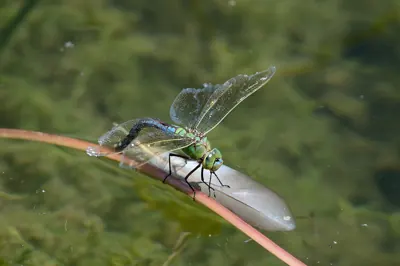 No. 01Emperor dragonflyAnax imperator
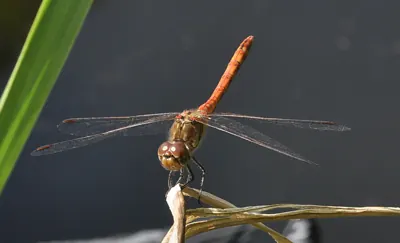 No. 02Common darterSympetrum striolatum
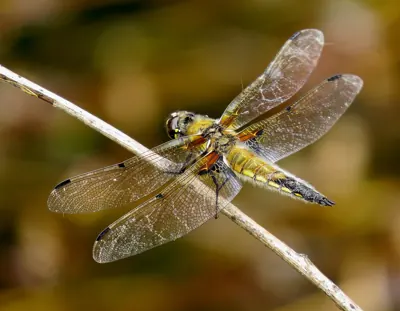 No. 03Four-spotted chaserLibellula quadrimaculata
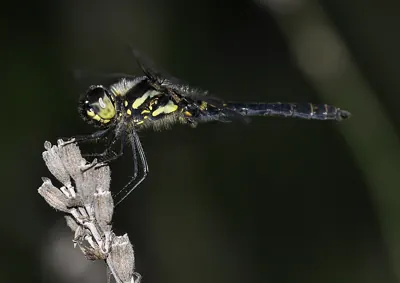 No. 04Black darterSympetrum danae
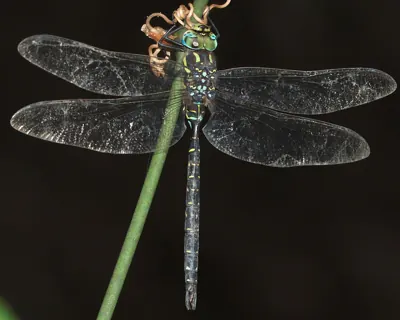 No. 05Common hawkerAeshna juncea
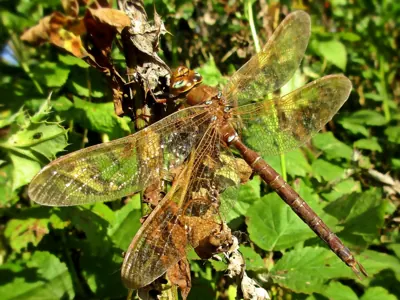 No. 06Brown hawkerAeshna grandisNo. 07Migrant hawkerAeshna mixta
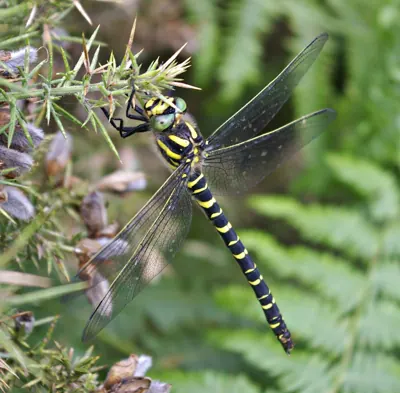 No. 08Golden-ringed dragonflyCordulegaster boltonii
Damselflies
Zygoptera: slimmer, with four similar wings, usually folded back at rest.
No. 01 · Anax imperator
Emperor dragonfly
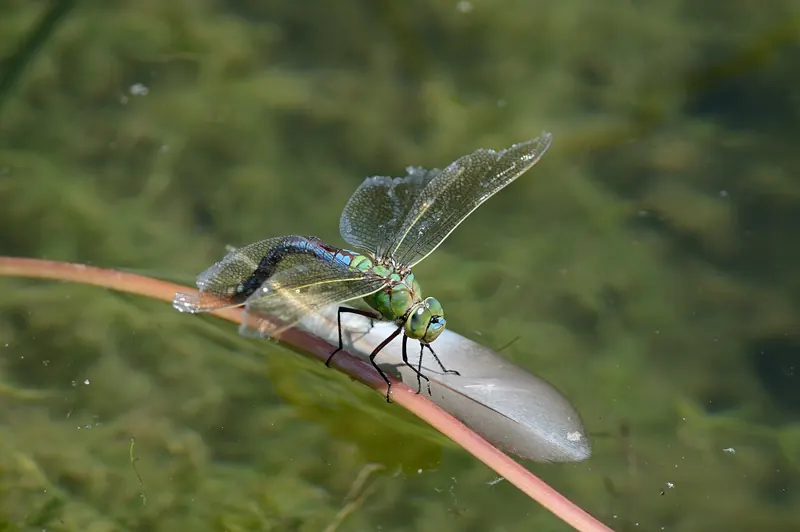
- The emperor is Britain’s bulkiest dragonfly: 78 mm long, with an apple-green thorax. British Dragonfly Society: Emperor Dragonfly
- Emperors rarely settle, and even eat their prey in flight. British Dragonfly Society: Emperor Dragonfly
- Manx Wildlife Trust lists the Isle of Man in the emperor’s range. Manx Wildlife Trust: Emperor dragonfly · checked 31 Oct 2026
No. 02 · Sympetrum striolatum
Common darter
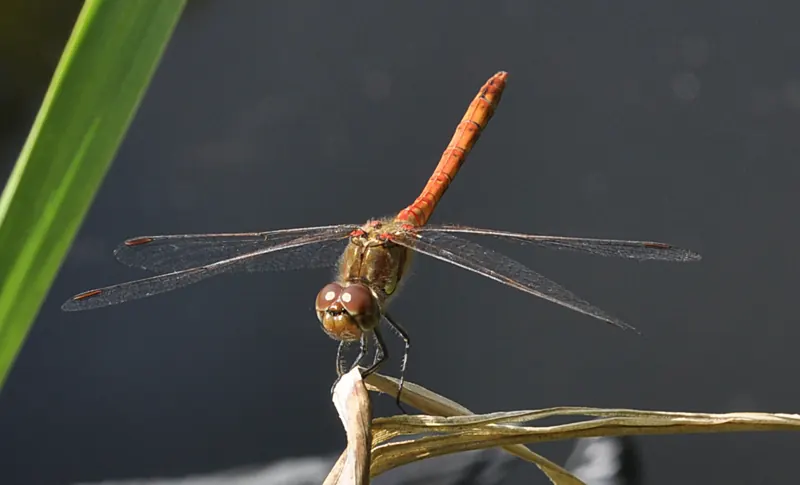
- The common darter can be found well into November. British Dragonfly Society: Common Darter
- Dragonflies rest with their wings held out from the body, and their big eyes usually touch, at least at one point. British Dragonfly Society: Frequently asked questions
No. 03 · Libellula quadrimaculata
Four-spotted chaser
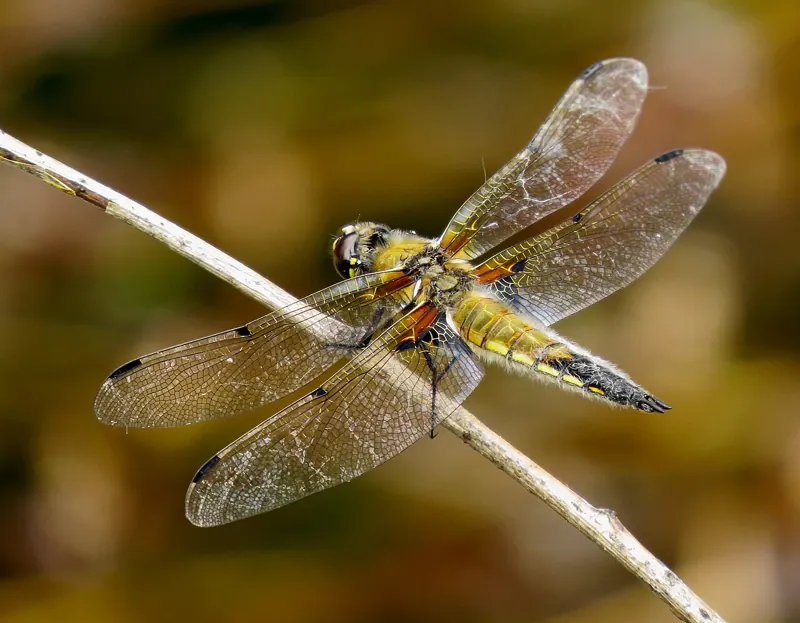
- The four-spotted chaser has two obvious dark spots on each wing. British Dragonfly Society: Four-spotted Chaser
- Migrant hawkers and four-spotted chasers sometimes gather in big swarms, usually where there is plenty of food. British Dragonfly Society: Frequently asked questions
No. 04 · Sympetrum danae
Black darter
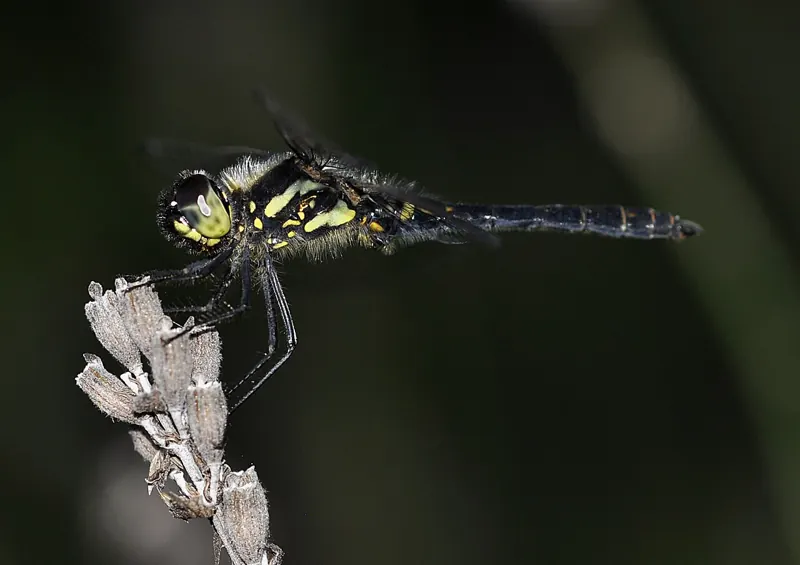
- The black darter is the only black dragonfly in the UK (the males are black). British Dragonfly Society: Black Darter
- Manx Wildlife Trust is most concerned for the upland species: black darter, emerald damselfly and common hawker. Manx Wildlife Trust: State of Nature 2024, terrestrial invertebrates · checked 31 Oct 2026
No. 05 · Aeshna juncea
Common hawker
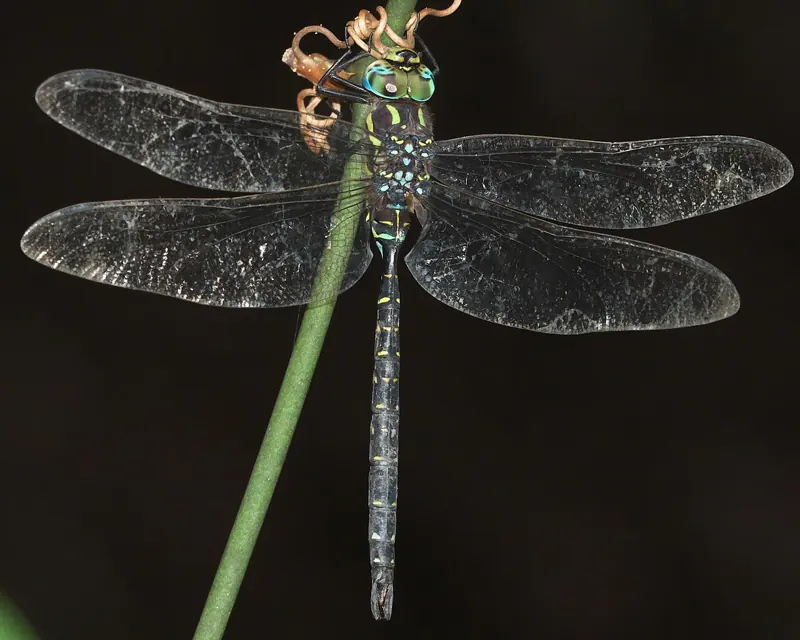
- The common hawker is 74 mm long and lives by moorland pools. British Dragonfly Society: Common Hawker
- Most kinds leave the water in the morning to become adults, but hawkers do it in the dark. British Dragonfly Society: Life cycle and biology
No. 06 · Aeshna grandis
Brown hawker
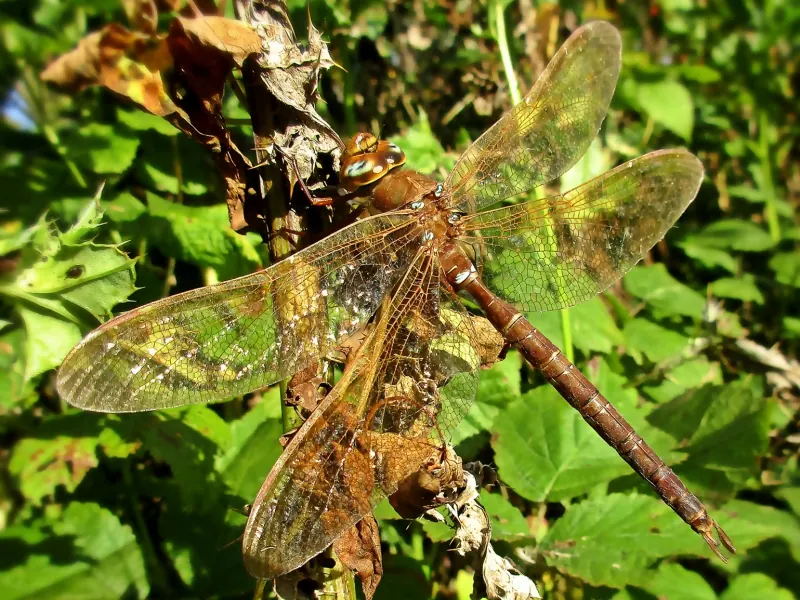
- The brown hawker is a large brown hawker with golden-brown wings. British Dragonfly Society: Brown Hawker
- That size belongs to the larger hawkers, such as the emperor and the brown hawker. British Dragonfly Society: Frequently asked questions
No. 07 · Aeshna mixta
Migrant hawker
We haven’t found a public domain or CC0 photo of this one that we can be sure is labelled correctly, so there’s no picture yet.
- The migrant hawker has a yellow mark shaped like a golf tee near the top of its abdomen. British Dragonfly Society: Migrant Hawker
- Migrant hawkers and four-spotted chasers sometimes gather in big swarms, usually where there is plenty of food. British Dragonfly Society: Frequently asked questions
No. 08 · Cordulegaster boltonii
Golden-ringed dragonfly
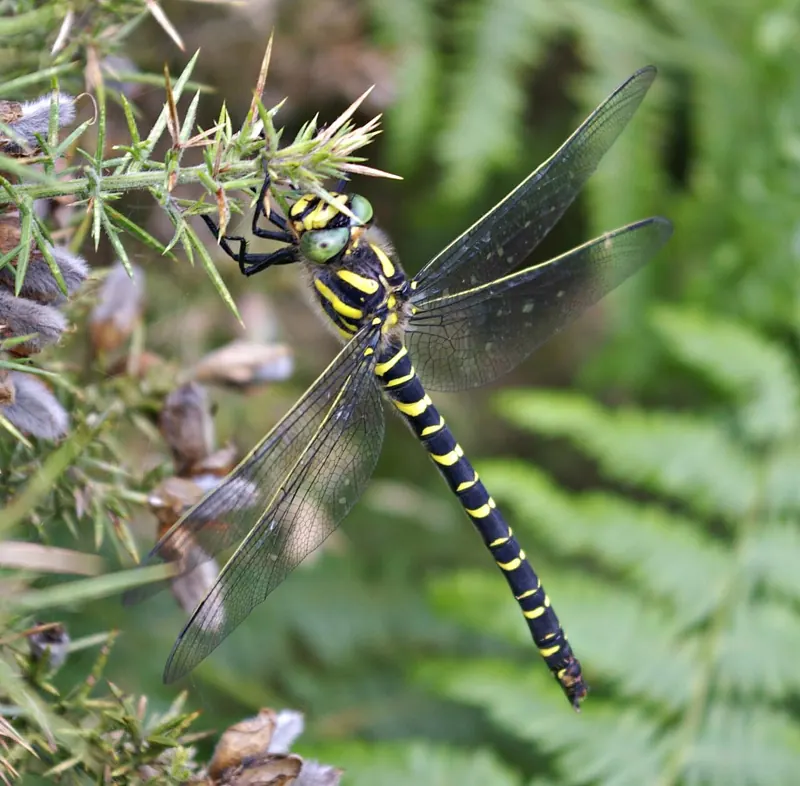
- The golden-ringed dragonfly has yellow and black rings. Females are 84 mm long. British Dragonfly Society: Golden-ringed Dragonfly
- Larvae usually take one or two years to grow, from just 2 to 3 months (emerald damselflies) to more than five years (golden-ringed dragonfly). British Dragonfly Society: Life cycle and biology
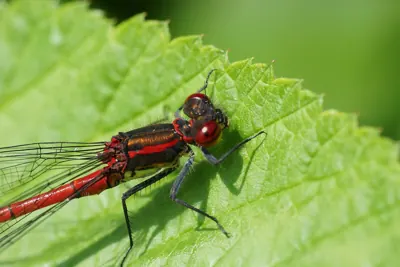
No. 09 · Pyrrhosoma nymphula
Large red damselfly
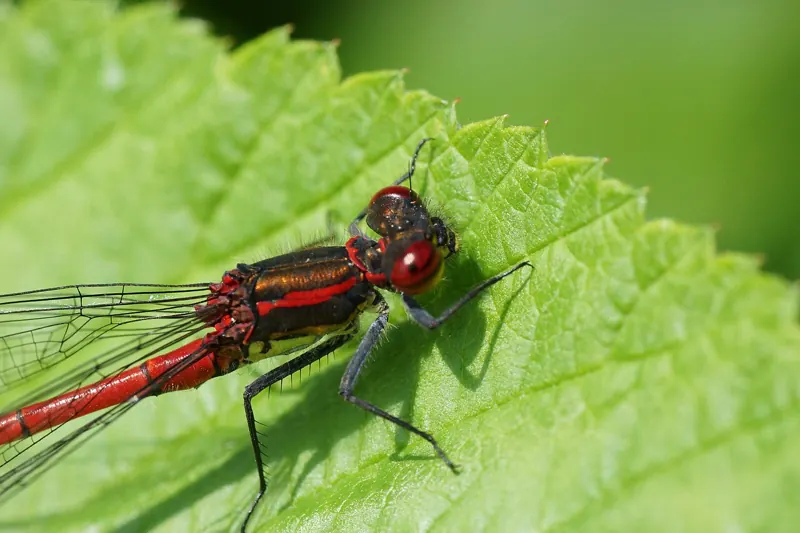
- The large red damselfly is the most common red damselfly. British Dragonfly Society: Large Red Damselfly
- Most damselflies rest with their wings folded back along the body, and their eyes are always separated. British Dragonfly Society: Frequently asked questions
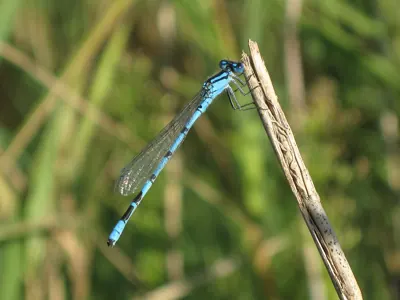
No. 10 · Enallagma cyathigerum
Common blue damselfly
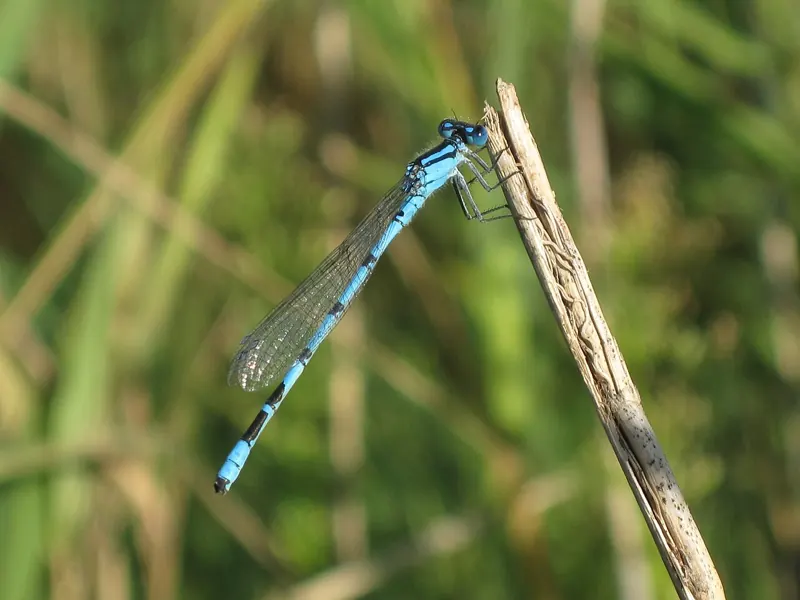
- The male common blue damselfly has a mushroom-shaped mark below the wing base. British Dragonfly Society: Common Blue Damselfly
- Newly emerged common blue damselflies are often pale pinkish-brown rather than sky-blue. British Dragonfly Society: Frequently asked questions
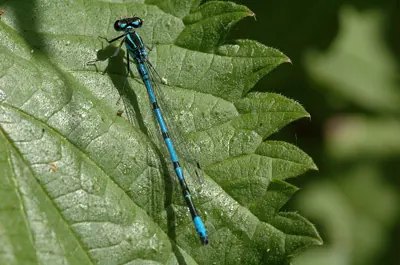
No. 11 · Coenagrion puella
Azure damselfly
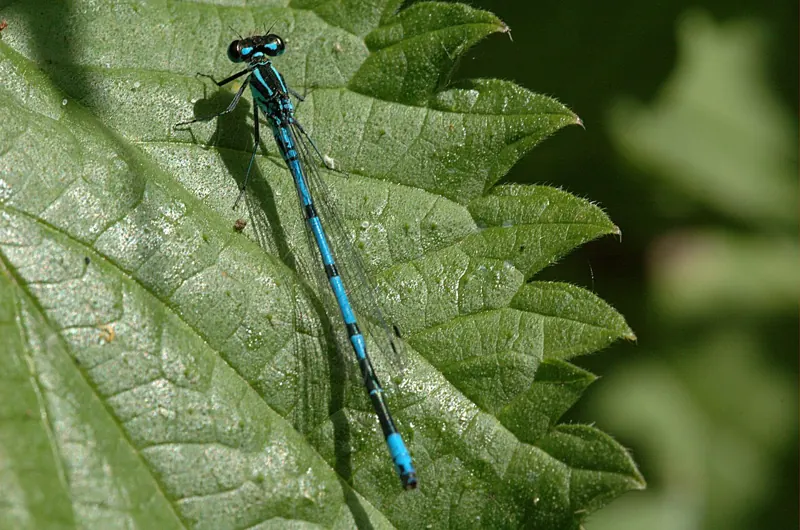
- The male azure damselfly has a ‘U’-shaped mark below the base of the wings. British Dragonfly Society: Azure Damselfly
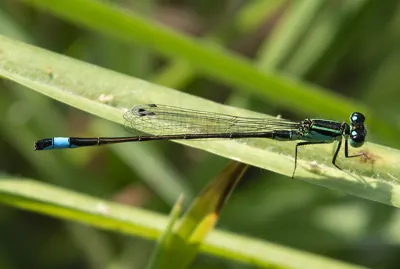
No. 12 · Ischnura elegans
Blue-tailed damselfly
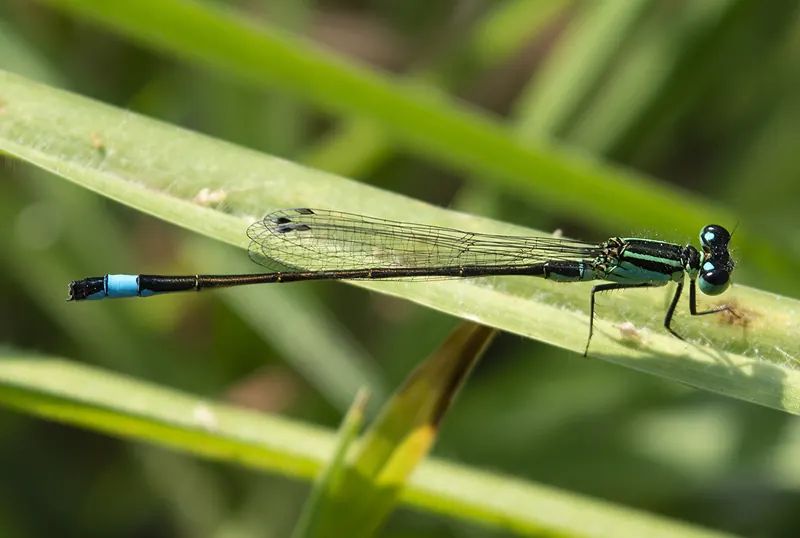
- Female blue-tailed damselflies come in at least 5 colour forms. British Dragonfly Society: Blue-tailed Damselfly
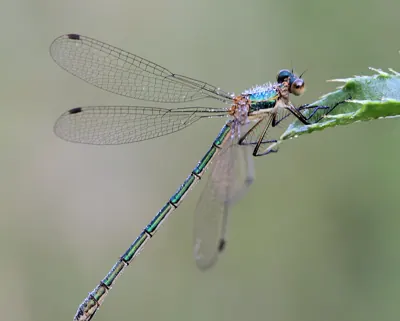
No. 13 · Lestes sponsa
Emerald damselfly
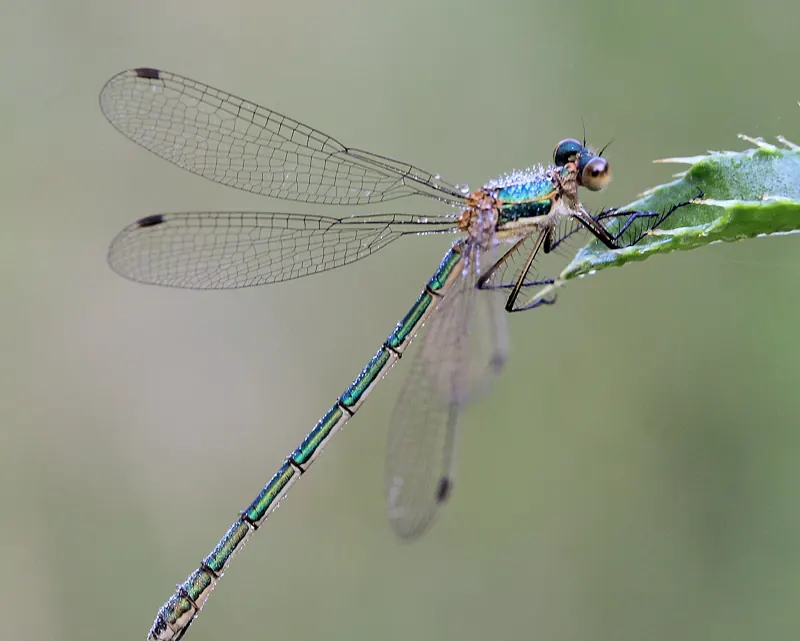
- Emerald damselflies rest with their wings half spread. British Dragonfly Society: Emerald Damselfly
- Manx Wildlife Trust is most concerned for the upland species: black darter, emerald damselfly and common hawker. Manx Wildlife Trust: State of Nature 2024, terrestrial invertebrates · checked 31 Oct 2026
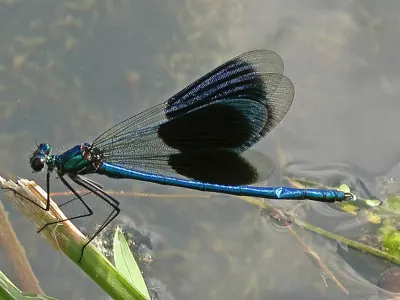
No. 14 · Calopteryx splendens
Banded demoiselle
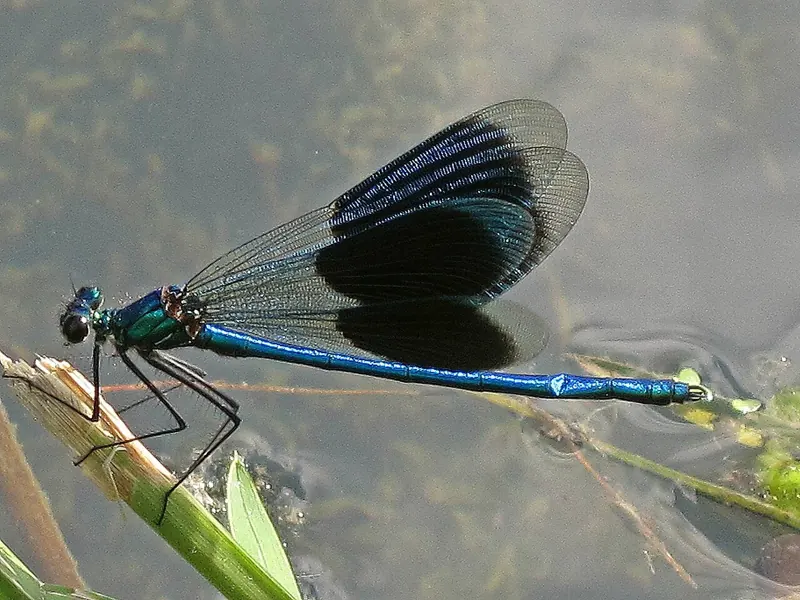
- The banded demoiselle is a large metallic damselfly with fluttering, butterfly-like wings. British Dragonfly Society: Banded Demoiselle