Dragonfly or damselfly?
Two groups in one family tree. Here’s how to tell them apart, and what they have in common.
Dragonflies and damselflies together are called Odonata, which means ‘toothed jaw’: their mouthparts are serrated. British Dragonfly Society: Frequently asked questions
Two groups
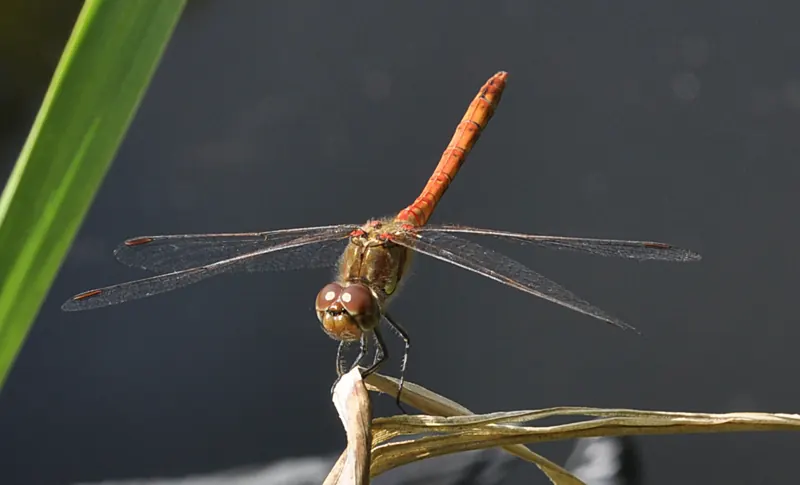
True dragonflies are the Anisoptera, meaning ‘unequal-winged’: their hind wings are usually shorter and broader than their front wings. British Dragonfly Society: Frequently asked questions
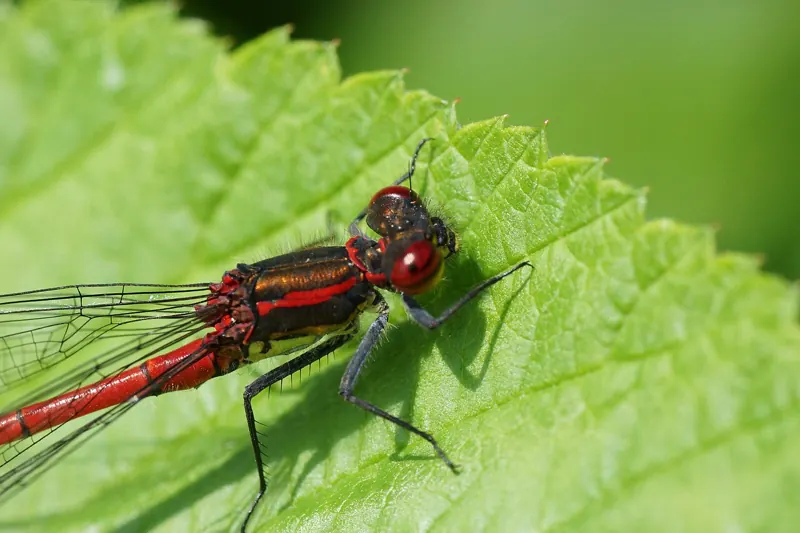
Damselflies are the Zygoptera, meaning ‘pair-winged’ or ‘equal-winged’: all four wings are a similar size and shape. British Dragonfly Society: Frequently asked questions
At rest
Dragonflies rest with their wings held out from the body, and their big eyes usually touch, at least at one point. British Dragonfly Society: Frequently asked questions
Most damselflies rest with their wings folded back along the body, and their eyes are always separated. British Dragonfly Society: Frequently asked questions
Underwater
Damselfly larvae have little plates (lamellae) at the end of the abdomen that act as extra gills. Dragonfly larvae don’t have these. British Dragonfly Society: Frequently asked questions
Eyes, antennae and ears
A dragonfly can have as many as 30,000 lenses in each eye. Natural History Museum, London: Dragonflies, the ultimate hunters Their huge eyes give them near-360° vision. Natural History Museum, London: Dragonflies, the ultimate hunters
Dragonflies do have antennae, but they are very tiny and hard to see. British Dragonfly Society: Frequently asked questions
Dragonflies can’t hear, so their eyes are vital. Natural History Museum, London: Dragonflies, the ultimate hunters
How many kinds?
There are around 6,000 species of dragonflies and damselflies in the world, and most live in the tropics. Natural History Museum, London: Dragonflies, the ultimate hunters · checked 31 Oct 2026
56 species have been seen in the UK and Ireland. Natural History Museum, London: Dragonflies, the ultimate hunters · checked 31 Oct 2026 46 of those 56 are residents or regular migrants; the rest are rare ‘vagrants’. Natural History Museum, London (news, Sept 2021): Dragonfly species are colonising the UK at a greater rate · checked 31 Oct 2026
Test yourself with Dragonfly or Damselfly?
Next: egg, larva and adult →