Egg, larva and adult
Most of a dragonfly’s life happens underwater, out of sight. The flying part comes right at the end.
A dragonfly’s life has three stages: egg, larva (also called a nymph) and adult. British Dragonfly Society: Life cycle and biology Dragonflies have no pupa stage: unlike butterflies, they go straight from larva to adult. British Dragonfly Society: Life cycle and biology
Dragonflies spend most of their lives as larvae. British Dragonfly Society: Life cycle and biology
Eggs
A female can lay hundreds of eggs. British Dragonfly Society: Life cycle and biology
All damselflies and hawkers push their eggs into plant stems or leaves, rotten wood or mud. British Dragonfly Society: Life cycle and biology
Chasers, skimmers and darters lay round eggs in a jelly-like blob, by dipping the tip of the tail into the water again and again. British Dragonfly Society: Life cycle and biology
While the female lays her eggs, some males stay linked to her ‘in tandem’ to guard her. British Dragonfly Society: Life cycle and biology
Eggs hatch within 2 to 5 weeks, or for some kinds, the following spring. British Dragonfly Society: Life cycle and biology A tiny tadpole-like prolarva comes out of the egg first. British Dragonfly Society: Life cycle and biology
The larva
Larvae have six legs, just like adults. British Dragonfly Society: Life cycle and biology Larvae eat insect larvae, worms, snails, tadpoles and even small fish. British Dragonfly Society: Life cycle and biology
A larva has a hinged jaw (the labium) that shoots out in an instant to catch prey. British Dragonfly Society: Life cycle and biology
Damselfly larvae have little plates (lamellae) at the end of the abdomen that act as extra gills. Dragonfly larvae don’t have these. British Dragonfly Society: Frequently asked questions
The larva eats live prey and moults its skin a further 5 to 14 times as it grows. British Dragonfly Society: Life cycle and biology
Larvae usually take one or two years to grow, from just 2 to 3 months (emerald damselflies) to more than five years (golden-ringed dragonfly). British Dragonfly Society: Life cycle and biology
Leaving the water
When it is ready, the larva climbs up a plant stem out of the water to find a secure support. British Dragonfly Society: Life cycle and biology
Most kinds leave the water in the morning to become adults, but hawkers do it in the dark. British Dragonfly Society: Life cycle and biology
Turning into an adult takes between one hour (damselflies) and three hours (dragonflies). British Dragonfly Society: Life cycle and biology
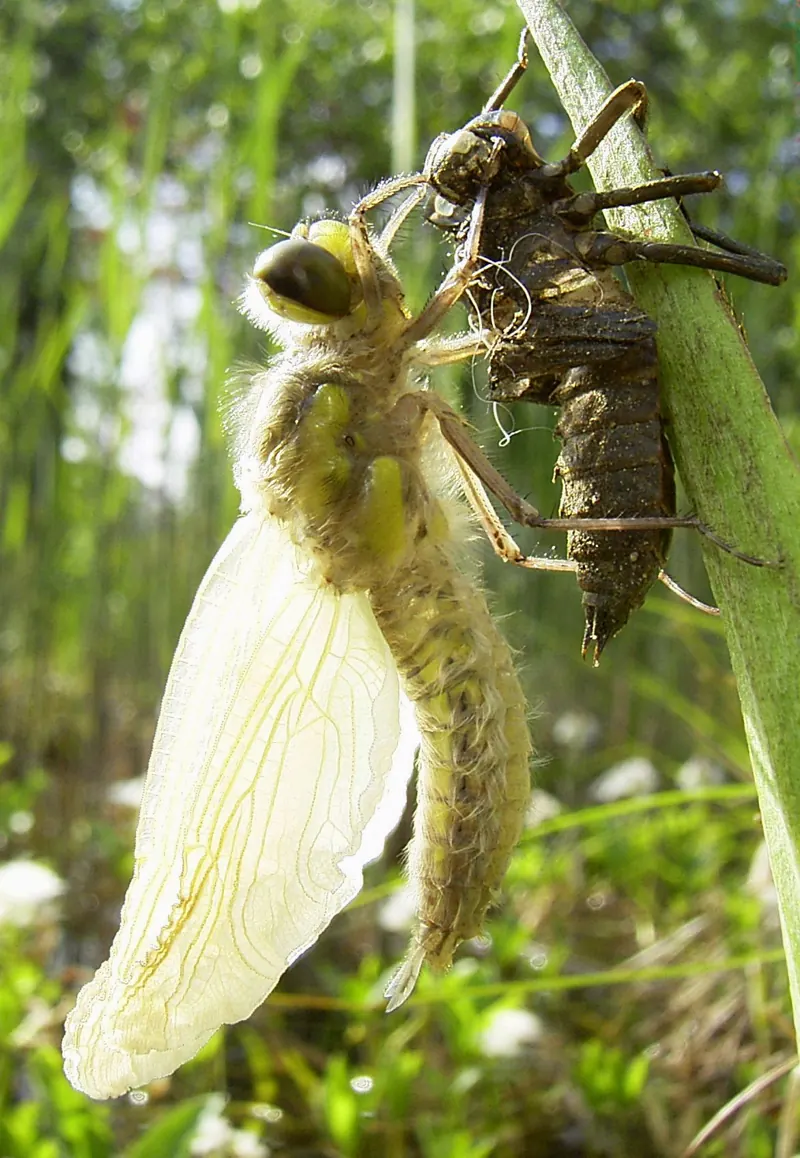
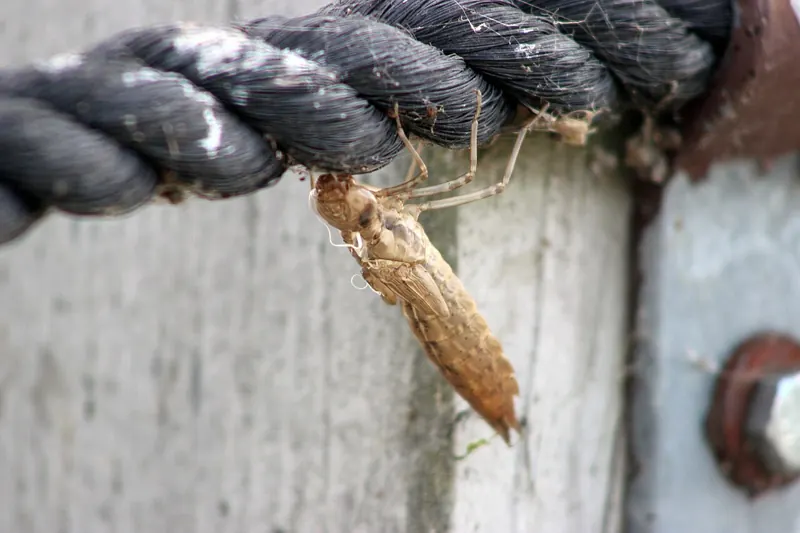
The cast skin left behind is called an exuvia. British Dragonfly Society: Life cycle and biology
The first days
Its first flight, the maiden flight, is weak and usually only a few metres long. British Dragonfly Society: Life cycle and biology
New adults are pale. They spend about a week feeding away from water while they gain their adult colours. British Dragonfly Society: Life cycle and biology
Newly emerged common blue damselflies are often pale pinkish-brown rather than sky-blue. British Dragonfly Society: Frequently asked questions
How long it all takes
In Britain, even a lucky adult damselfly seldom lives more than two weeks, and a dragonfly more than two months. British Dragonfly Society: Frequently asked questions
From egg to the end of adult life, the whole life cycle takes at least about 6 months, and some big dragonflies take 6 or 7 years. Most of it is spent underwater as a larva. British Dragonfly Society: Frequently asked questions
Next: top hunters →